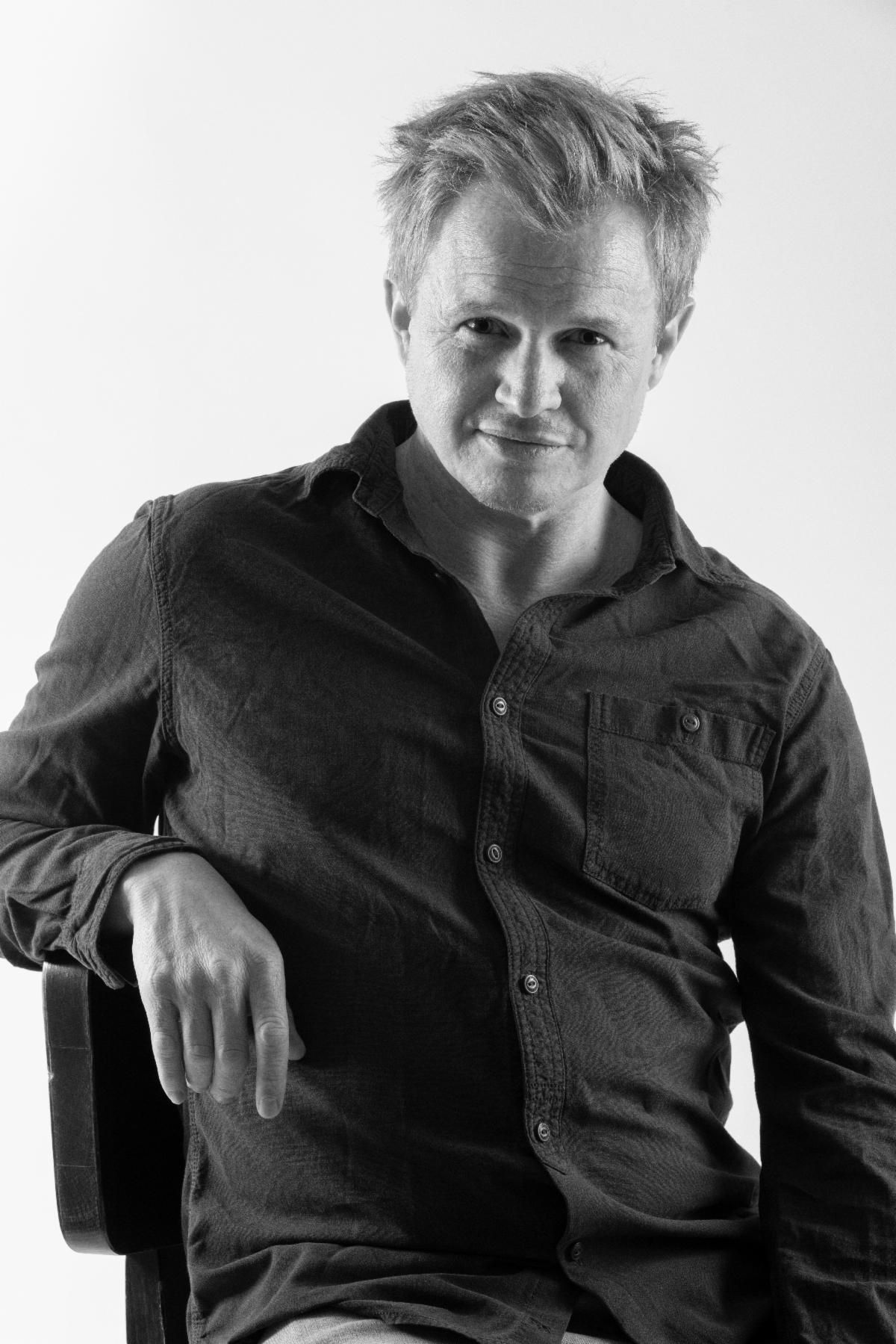
|
1. Survival is a quiet undercurrent in the book. How did your personal experience influence the emotional core of the story?
Statistically, I was supposed to be dead by my early twenties. It took me a long time to realize there is nothing unique about that when you look at the broader human condition. In my late twenties, my lung function plummeted, and despite my "carpe diem" philosophy, I began to make peace with the end. The year I turned thirty, a breakthrough drug was released that was nothing short of a revival. Suddenly, I had a future.
Most of the other patients I knew—well, they didn’t. They got left behind. They “graduated,” as it says in the book. I should have been Class of 2004, at least. But I’m still here and they aren’t, and that messed with my head. It still does. This novel was my attempt to make sense of that. The process is as tortuous as it is cathartic, but I promised myself I would forge a novel from that extra time I was granted. I wanted to write the type of book I needed to read when things were at their darkest.
2. In your own words, what is this novel really about — beyond the plot?
"This Is How People Die" is about disease and how it robs us of agency. It is a plea for dignity in the face of mortality. It explores how brilliance and beauty can be forged from suffering—though it should be noted that suffering itself isn’t the catalyst; life is simply tragic and hilarious. It’s about survivors’ guilt, addiction, and above all, it’s about love—making it, losing it, and carrying it deep within us.
3. What first sparked the idea for this story?
I’ve always been fascinated by Chopin and the cliché of the suffering genius. Then I discovered Bob Flanagan, a performance artist with Cystic Fibrosis who would incorporate self-inflicted pain into his exhibitions. It went beyond exploring pain to feel alive; it became revenge on his own body. To live with CF is to become very intimate with pain, and Bob took that to an extreme that somehow kept him alive far longer than the statistics of the time allowed. Born in 1952, long before modern therapies, he waged a private war on his body and survived until he was 43. I saw the film SICK: The Life & Death of Bob Flanagan, Supermasochist much younger than I probably should have. He became a cautionary tale, but also a lighthouse and a kind of folk hero—and CF doesn’t have many of those.
4. The title is bold and arresting. What does it mean to you?
The title, to me, is hilarious. It’s the punchline you tell yourself right before the "big dark" arrives. Coming out the other side of that notion is humor at its darkest and most pure. Laughter is simply the sound of overcoming a fear; it is the most difficult human reflex to suppress. The only way to stop a laugh is to scare yourself, and even that usually resolves into laughter eventually.
This book is the gasp one takes between a laughing fit and a coughing fit. Nothing about this novel is meant to be "sane." Yet, for me, this narrative is the only healthy reaction to the absurdity of a terminal diagnosis. It’s about the psychological whiplash of learning to live with "carpe diem"—preparing for a finish line—and then being handed back a future in the form of a pill. It is a future with a staggering price tag: a single pill of the miracle CF drug is four times more expensive than its weight in 24k gold.
5. How did your background in journalism shape the way you approached fiction?
Being a writer is a kind of condition; this novel was always the goal. Journalism is a reaction to reality—an art of fashioning a story within intense constraints. The most important of those constraints is respecting the intelligence of my audience.
Fiction requires a different set of rules. I started in poetry, but journalism honed my storytelling and taught me brevity—though some may doubt that capacity when reading TIHPD. Most importantly, I’ve learned not to waste anyone’s time. Everything on the page is there for a reason. If we’re lucky, by the end, it all comes together.
6. This novel begins in Charleston and expands far beyond it. Why was that geographic journey important?
Charleston is a great place to start a story, and it’s where mine began. With so many people flocking to the city, I find it a fascinating place to leave. For me, it is a home with an air I can’t quite breathe until I depart—then the place drags me back across continents until I’m jumping off the Shem Creek bridge and floating home (a move I don't advise, considering what lurks at the mouth of it). I find myself staring at the Morris Island Lighthouse in the moonlight—the place where my soul was born. I once climbed it when I was twelve with my dad’s girlfriend while my father waited in the boat below, an old Boston Whaler, drinking beer and fending the boat off the concrete foundation.
7. What do you hope readers feel when they finish the final page?
"In on the joke." Relief (that it’s over). Catharsis (what writer doesn’t?). A few chills. And maybe a clichéd wry smile.
8. If you had to describe this novel in three words, what would they be?
I’m going to break your rule and offer a few aphorisms from the book:
There we were safe, but here we are free.
It is all one act.
If "I’m sorry" worked, they’d sell it in the pharmacy.
You can’t un-stir the milk from the coffee.
We breathe harder when we hope. (My take on South Carolina’s "dum spiro spero")
Do not resuscitate, but please revive.
9. What are you most excited to talk about during launch conversations?
Dodging questions about why the book is so weird—because that would mean people actually read it. This book was inspired by a lot of other writers, as you’ll see below, and I would be absolutely delighted to divert any questions about me to them.
10. What books or writers most influenced this one?
Yikes. If I start with Milton, this list won’t end. So, I’ll stick to my 20th-century+ influences (with the exception of George Sand, who haunted me until I made her a narrator of the novel):
Roberto Bolaño, Jorge Luis Borges, Charles Bukowski, Ted Chiang, Mark Z. Danielewski, James Dickey, Mariana Enríquez, Percival Everett, William Gibson, Nino Haratischwili, Sadegh Hedayat, Grady Hendrix, Kazuo Ishiguro, Denis Johnson, Rachel Kushner, Benjamín Labatut, Cormac McCarthy, China Miéville, Keith Lee Morris, Ottessa Moshfegh, Haruki Murakami, Vladimir Nabokov, Breece D'J Pancake, Ashleigh Bryant Phillips, Thomas Pynchon, George Sand, Merlin Sheldrake, Donna Tartt, Olga Tokarczuk, John Kennedy Toole, Jeff VanderMeer, Kurt Vonnegut, David Foster Wallace, Jackson Wills, and any audiobook read by Will Patton.
_________________________________________________________________________
TO PREODER YOUR COPY OF THIS IS HOW PEOPLE DIE CLICK HERE!
Warmly,
Your Evening Post Books Team
WHO IS EVENING POST BOOKS?
We’re a Southern press: but not in the traditional sense. The South is more than a setting. It’s a lens, a rhythm, a tension. A cultural inheritance that still shapes the stories we tell and how we tell them. We publish work that reflects that complexity: stories that honor overlooked narratives, distinct voices, and the layered truths of life in (or shaped by) the American South. We’re especially drawn to writing that asks questions, challenges conventions, and adds something meaningful to the conversation. Our list is small by design. That means more editorial attention, deeper partnership, and more room to make something that actually reflects our writers' voices. We’re looking ahead. And we’re building a new kind of Southern literary catalog, one that doesn’t simplify the South, but expands it.
|